-

Thomas J. Webster
Professor, Brown University, USA
Research field:Nanomedicine, Biomaterials, 4D printing, Artificial Intelligence, Sensors.
Thomas J. Webster's (H index: 135) degrees are in chemical engineering from the University of Pittsburgh (B.S., 1995; USA) and in biomedical engineering from RPI (Ph.D., 2000; USA). He has formed over a dozen companies who have numerous FDA approved medical products currently improving human health in over 30,000 patients. He currently serves as CSO of Novaurum whom is pioneering the use of ALD in medical devices. He is also currently serving as a professor at Brown University, Saveetha University, Hebei University of Technology, UFPI, and others. Dr. Webster has numerous awards including: 2020, World Top 2% Scientist by Citations (PLOS); 2020, SCOPUS Highly Cited Research (Top 1% Materials Science and Mixed Fields); 2021, Clarivate Top 0.1% Most Influential Researchers (Pharmacology and Toxicology); 2022, Best Materials Science Scientist by Citations (Research.com); and is a fellow of over 8 societies. Prof. Webster is a former President of the U.S. Society for Biomaterials and has over 1,350 publications to his credit with over 55,000 citations. He was recently nominated for the Nobel Prize in Chemistry. Prof. Webster also recently formed a fund to support Nigerian student research opportunities in the U.S.
-
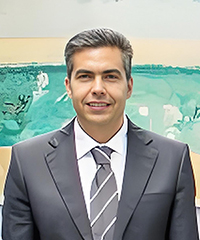
Joao Manuel R. S. Tavares
Professor, Universidade do Porto, Portugal
Research field:Medical Imaging, Biomedical Engineering, BiomechanicsProduct Development, Computational Vision.
João Manuel R. S. Tavares holds a BSc Degree in Mechanical Engineering, an MSc and PhD in Electrical and Computer Engineering, and a Habilitation in Mechanical Engineering. With a strong focus on the intersection of biomechanics, biomedical engineering, and computational methods, he has made significant contributions to the field. He currently serves as the Editor-in-Chief of Computer Methods in Biomechanics and Biomedical Engineering: Imaging & Visualization and Computer Methods in Biomechanics and Biomedical Engineering, both journals that explore advanced computational techniques in the analysis of biomedical systems. Additionally, Dr. Tavares is the Editor of the Lecture Notes in Computational Vision and Biomechanics book series, where he emphasizes the application of computational vision and engineering principles to biological systems, aiming to bridge mechanical engineering innovations with biomedical applications. His multidisciplinary expertise integrates mechanical engineering, computer science, and biomedical engineering, fostering advancements in the understanding and treatment of biological systems through cutting-edge computational methods.
-
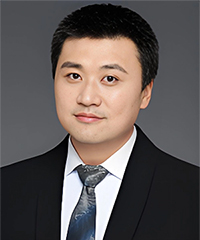
Hui Liu
Professor, Nanjing University of Information Science & Technology, China.
Research field:Human Activity Recognition, Body Area Network (BAN), Physiological Signal Acquisition and Analysis, Wearable Sensors, Metaverse.
Professor and PhD Supervisor at the School of Artificial Intelligence (Future Technologies), Nanjing University of Information Science and Technology. Ranked among the top 2% of global scientists by Stanford and top 0.05% by ScholarGPS (10th in Human Behavior). Selected for the National High-Level Talent Plan A (Youth) and Distinguished Professor of Jiangsu Province. Chief Expert at State Grid Nanjing Automation Group and Visiting Professor at multiple universities, including Xi'an University of Architecture and Technology (China), University of Applied Sciences Osnabrück (Germany), University of Bremen (Germany), and New Lisbon University (Portugal). He holds a Bachelor's from Shanghai Jiao Tong University, dual Master's from Berlin University of Technology and Shanghai Jiao Tong University, and a Ph.D. from the University of Bremen. He has led major projects in Germany, including the development of a smart knee bandage for real-time human motion recognition, which won Best Student Paper at the International Biomedical Engineering Conference. He has published 107 works, including 65 SCI journal papers (58 as first or corresponding author), 4 monographs, and 4 book chapters. Eight of his papers have been designated as hot papers (top 0.1%). He is the Editor-in-Chief of Ubiquitous Artificial Intelligence and has served on editorial boards of over 40 journals, including Nature Communications. He has received the Best Reviewer Award from Sensors 2023 and the "Trustworthy Reviewer" award from the Institute of Physics (UK).
-
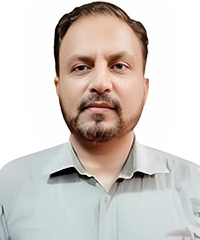
Haroon Khan
Professor, Abdul Wali Khan University Mardan, Pakistan
Research field:Drug Discovery from Natural, Pharmacology and Neuropharmacology, Bioactive Compounds.
Prof. Dr. Haroon Khan is a professor and chairman of the Department of Pharmacy. He has 452 publications. Prof. Khan is the editorial board member of a number of journals, including consulting editor of Pharmacological Research, Section Editor of Current Neuropharmacology and Current Molecular Pharmacology, Associate Editor of Current Bioactive Compounds, and Academic Editor of Evidence-Based Complementary and Alternative Medicine. He regularly edits a number of books for international publishers such as Elsevier, CRC, Springer, Bentham science, etc. The scientific contribution of Dr. Khan has been acknowledged by the Pakistan Council for Science and Pakistan Council for Science and Technology (PCST) and awarded Research Productivity awards four times for the years 2011–2014. It is worth mentioning that Dr. Haroon Khan has been placed in the recently published Stanford's list of the world's top 2% of scientists. This clearly reflects the outstanding research potential of Dr. Khan acknowledged globally.
-
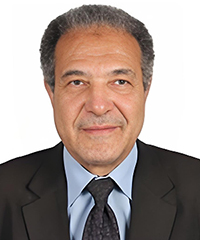
Ahmed G Hegazi
Professor, National Research Centre, Egypt
Research field:Microbiology and Immunology.
Ahmed Hegazi is currently a Professor of Microbiology and Immunology at the National Research Center, Egypt. He received his Master's degree in 1979 and his PhD in 1981. In addition to his strong background in microbiology and immunology, Prof. Hegazi has made important biomedical contributions, particularly in the investigation of natural products and their interactions with biological systems. In recent years, his research has focused on bee products and their therapeutic effects, with special emphasis on their antimicrobial, anti-inflammatory, immunomodulatory, and wound-healing properties. His work contributes to biomedical research by exploring how bioactive compounds derived from natural sources can be applied in disease prevention, immune regulation, and complementary therapeutic strategies, especially in the context of infectious diseases and immune-related disorders. Prof. Hegazi has organized and contributed to numerous national and international research projects since 1977 and has served as the principal investigator for multiple projects at the National Research Center. He has published 222 scientific papers in national and international journals, many of which bridge microbiology, immunology, and biomedical sciences. He has also served on the editorial boards of several national and international scientific journals, reflecting his recognized expertise in biomedical and life sciences research. In addition to his academic and research activities, Dr. Hegazi holds several leadership positions: he is President of the Egyptian Environmental Society for Uses and Production of Bee Products, Secretary of the Egyptian Society of Apitherapy, Secretary General of the African Federation of Apiculture Associations, and a member of the International Apitherapy Commission (APIMONDIA). Through these roles, he actively promotes the integration of biomedical research, natural therapeutics, and translational health applications at both regional and international levels.
-
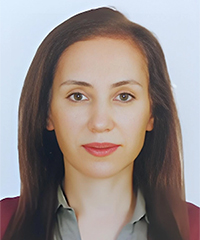
Zeliha Selamoglu
Professor, Nigde Omer Halisdemir University, Turkey
Research field:Medical Biology, Molecular Biology, Biochemistry, Biotechnology, Oxidative stress, Antioxidants, Antiaging, Cancer.
Zeliha Selamoglu is a Full Professor in Medical Biology department of Nigde Ömer Halisdemir University, Turkey. She earned her PhD in Biology from Inonu University, She has published over 365 peerreviewed journal articles with over 8590 citations and many technical reports. She is a member of Society for Experimental Biology and Medicine: Associate Membership and European association for cancer research. She has served as Editorial Board member for many Journals.
She is Top 2% Scientists Worldwide 2021, 2022, 2023, 2024, 2025 by Stanford University.
Highly Ranked Scholar for Prior Five Years: In the Traditional medicine in the top 0.05% of all
-
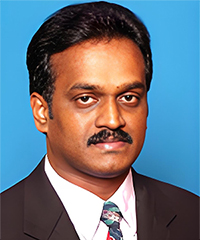
Sasidharan Sreenivasan
Assoc. Prof., Universiti Sains Malaysia, Malaysia
Research field:Microbiology and Pharmacology.
Prof. Sasidharan Sreenivasan is a pharmaceutical biologist and pharmacognosist with extensive research experience in the transdisciplinary aspects of medicinal plant research. His primary aim is to highlight the importance of medicinal plants in drug discovery. In recent years, herbal remedies have gained recognition as dietary supplements for disease prevention and as alternative/complementary medicine. The WHO estimates that 80% of the world's population relies on traditional herbal medicine for primary healthcare. While thousands of plants have been documented in traditional medicine, few studies have explored how these wild resources are integrated into modern medicine. Prof. Sasidharan Sreenivasan's scientific research on medicinal plants, based on modern methods, has significantly contributed to the generation of scientific data, leading to the integration of this knowledge into modern medicine.
-

Nicola Amodio
Assistant Professor, Magna Graecia University of Catanzaro, Italy
Research field:Biomedicine, Molecular Oncology.
Nicola Amodio collaborates with many scientific institutions in Italy (University of Calabria; University of Milan; Rizzoli Institute in Palermo; University of Genova; University of Brescia) and abroad (DFCI, Harvard Medical School; Washington University in St. Louis). He is consultant for Cellatrix, a biotech company in St. Louis (MO; USA), whose mission is the development of tools for the diagnosis and treatment of cancer. Nicola Amodio is the PI of a Research Unit within a MOH grant (2020-2022) at University of Catanzaro; since 2006, he has been Associate Investigator, and is currently PI, of grants funded by Italian Association for Cancer Research. He received a grant from Fondazione Lilli Funaro (Cosenza, I) in 2013 and a post-doctoral grant from Fondazione Umberto Veronesi (Milan, I) in 2016. He is member of the Italian Society for Cancer Research (SIC) and of Italian Society of Experimental Hematology (SIES) and Pathology (SIPMET). He delivered oral presentations at international and national scientific meetings. During his career, Nicola Amodio was awarded, for his scientific activity, by Fondazione Filli Funaro, the Italian Association for Cell Cultures (AICC), Soroptimist Club Varese, American Society of Haematology, Fondazione Umberto Veronesi, and other italian agencies. NA is currently Section editor in chief of “Cancers” journal and part of the Editorial Board of international peer-reviewed journals (Plos One, Non-Coding RNA, Frontiers in Pharmacology) Major focus of Dr. Nicola Amodio’s research has been the identification of novel molecularly-based therapies for cancers using integrated genomic/epigenomic analyses. Overall, NA research activity has provided novel insights into the molecular mechanisms of hematological malignancies, as multiple myeloma, and the framework for the development of innovative anti-cancer therapeutics, using non-coding RNA- targeting oligonucleotides and small molecules. Nicola Amodio’s studies have led to the identification of novel cancer vulnerabilities, including non-coding RNAs and transcription factors, with diagnostic and therapeutic potential; his studies have been highly cited and discussed by journal editorials, and have provided the molecular rationale for ongoing clinical trials in Italian and US institutions using small molecules and microRNA antagonists to treat hematological malignancies.
Important Dates
-
Last date for abstract submission:
August 31, 2026
-
Last date for full paper submission:
September 15, 2026
-
Last date for paper acceptance:
October 15, 2026
-
Last date for registration:
November 15, 2025
Contact Us
-
Conference Secretary